

Business Consulting vs Digital Marketing Consulting: What’s the Difference?
Introduction
Many business owners looking for expert guidance often come across two common services: Business Consulting and Digital Marketing Consulting. While both aim to help businesses grow, they focus on different areas of an organization and solve different types of challenges.
Understanding the difference between these services is important when deciding where to invest time and resources. A company struggling with overall business performance may need strategic business consulting, while a company looking to increase leads and online visibility may benefit more from digital marketing consulting.
In today’s competitive business landscape, organizations often require both strategic business planning and effective digital marketing execution. However, knowing which service aligns with your immediate goals can help you achieve better results and maximize your return on investment.
In this article, we’ll explore Business Consulting vs Digital Marketing Consulting, compare their roles, responsibilities and benefits, and help you determine which type of consultant is right for your business.
Quick Answer: Business Consulting vs Digital Marketing Consulting
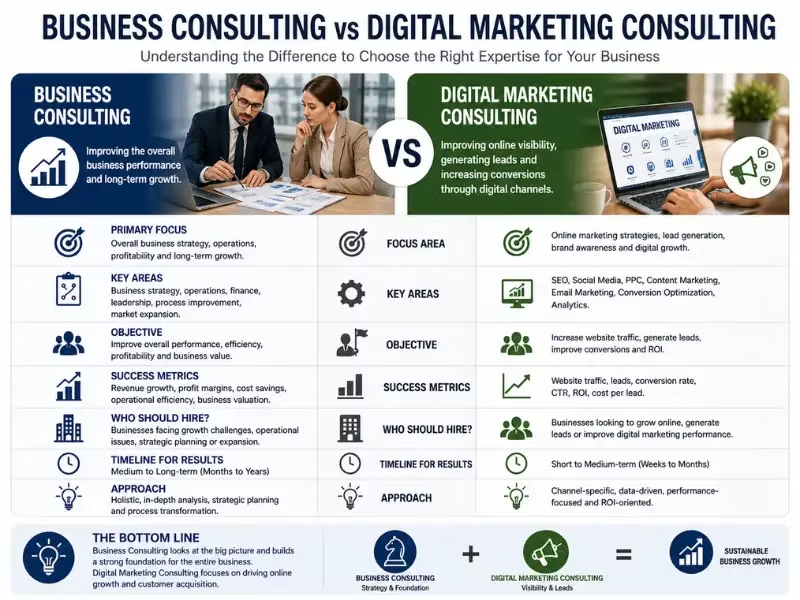
Business Consulting focuses on improving overall business performance, strategy, operations, profitability and growth.
Digital Marketing Consulting focuses specifically on improving online visibility, lead generation, customer acquisition and digital marketing performance.
In simple terms:
A Business Consultant helps improve the entire business.
A Digital Marketing Consultant helps improve how the business attracts and converts customers online.
What Is Business Consulting?
Business consulting is a broad professional service designed to help organizations improve performance, solve operational challenges and achieve strategic goals.
Business consultants evaluate various aspects of an organization, including:
- Business strategy
- Operations
- Revenue growth
- Leadership
- Customer experience
- Financial performance
- Organizational structure
- Market expansion
Their primary objective is to help businesses become more efficient, profitable and scalable.
Example: If a company’s revenue has stagnated despite strong marketing efforts, a business consultant may analyze pricing models, operational inefficiencies, customer retention issues and expansion opportunities.
What Is Digital Marketing Consulting?
Digital marketing consulting focuses specifically on helping businesses improve their online presence and marketing performance.
Digital marketing consultants work on areas such as:
- Search Engine Optimization (SEO)
- Content Marketing
- Google Ads
- Social Media Marketing
- Lead Generation
- Conversion Rate Optimization
- Email Marketing
- Marketing Analytics
Their goal is to attract more qualified leads, improve brand visibility and increase online conversions.
Example: If a business receives low website traffic or struggles to generate leads online, a digital marketing consultant may develop SEO, paid advertising and content marketing strategies to improve results.
Business Consulting vs Digital Marketing Consulting: Key Differences
1. Primary Focus
Business Consulting
Focuses on the overall health and performance of the business.
Areas include:
- Growth strategy
- Profitability
- Operations
- Leadership
- Market expansion
- Organizational effectiveness
Digital Marketing Consulting
Focuses on marketing channels and customer acquisition.
Areas include:
- Website traffic
- Lead generation
- Brand awareness
- Online engagement
- Marketing ROI
Key Difference:
Business consulting addresses company-wide challenges, while
digital marketing consulting focuses specifically on
marketing-related growth.
2. Goals and Objectives
Business Consultant Goals
- Increase profitability
- Improve operational efficiency
- Develop growth strategies
- Support business expansion
- Optimize business processes
Digital Marketing Consultant Goals
- Increase website traffic
- Generate leads
- Improve search rankings
- Enhance online visibility
- Increase conversions
Key Difference:
Business consultants focus on overall business success, while
digital marketing consultants focus on customer acquisition and
marketing performance.
3. Scope of Work
Business Consulting Scope
A business consultant may work on:
- Strategic planning
- Business restructuring
- Process optimization
- Revenue growth initiatives
- Team development
- Competitive analysis
Digital Marketing Consulting Scope
A digital marketing consultant may work on:
- SEO campaigns
- Google Ads management
- Content strategy
- Social media campaigns
- Conversion optimization
- Marketing automation
Key Difference:
Business consulting has a broader scope that impacts multiple
departments, while digital marketing consulting focuses primarily
on marketing activities.
4. Problems They Solve
Business Consultant Solves:
- Slow business growth
- Operational inefficiencies
- Low profitability
- Expansion challenges
- Leadership issues
- Strategic planning gaps
Digital Marketing Consultant Solves:
- Low website traffic
- Poor lead generation
- Weak online presence
- Low conversion rates
- Poor campaign performance
- Ineffective digital strategies
Key Difference:
Business consultants solve organizational challenges, while digital
marketing consultants solve marketing and customer acquisition challenges.
5. Performance Metrics
Business Consultant Metrics
- Revenue growth
- Profit margins
- Operational efficiency
- Employee productivity
- Business expansion
- Customer retention
Digital Marketing Consultant Metrics
- Website traffic
- Search rankings
- Leads generated
- Cost per lead
- Conversion rates
- Return on ad spend (ROAS)
Key Difference:
Business consultants focus on business outcomes, while digital
marketing consultants focus on marketing outcomes.
When Should You Hire a Business Consultant?
A business consultant is ideal when:
- Business growth has stalled
- Profitability is declining
- Expansion plans are being developed
- Operational issues are affecting performance
- Strategic planning is required
- Leadership teams need guidance
Example: A manufacturing company planning to expand into new markets may need a business consultant to create a growth strategy and operational roadmap.
When Should You Hire a Digital Marketing Consultant?
A digital marketing consultant is ideal when:
- Website traffic is low
- Lead generation is weak
- SEO rankings are poor
- Online visibility needs improvement
- Marketing campaigns are underperforming
- Customer acquisition costs are increasing
Example: A healthcare clinic seeking more appointment bookings may hire a digital marketing consultant to improve local SEO and digital advertising campaigns.
Can a Business Need Both?
Absolutely.
Many growing companies benefit from both business consulting and digital marketing consulting.
Business Consultant
Helps determine:
- Growth objectives
- Revenue targets
- Market expansion plans
- Business priorities
Digital Marketing Consultant
Helps execute:
- Customer acquisition strategies
- SEO campaigns
- Lead generation programs
- Digital advertising initiatives
Together, they create a comprehensive growth framework that aligns business strategy with marketing execution.
Benefits of Business Consulting
- Improved strategic planning
- Better operational efficiency
- Increased profitability
- Stronger leadership decisions
- Sustainable business growth
- Reduced operational risks
Benefits of Digital Marketing Consulting
- Increased website traffic
- Higher-quality leads
- Improved online visibility
- Better marketing ROI
- Enhanced customer engagement
- Stronger brand awareness
How to Choose the Right Consultant
Are you struggling with overall business performance?
If yes, consider hiring a Business Consultant.
Are you struggling to attract customers online?
If yes, consider hiring a Digital Marketing Consultant.
Do you need both strategic direction and marketing execution?
Consider working with a professional who offers both business consulting and digital growth consulting services.
Conclusion
Understanding the difference between Business Consulting vs Digital Marketing Consulting is essential for choosing the right expertise for your organization.
A Business Consultant focuses on improving the overall performance of your company by addressing strategy, operations, profitability and long-term growth.
A Digital Marketing Consultant, on the other hand, focuses on increasing online visibility, generating leads, improving customer acquisition and maximizing marketing performance.
Neither service is inherently better than the other—they simply solve different business challenges. The right choice depends on your current goals, challenges and growth stage.
For many businesses, combining business consulting with digital marketing consulting creates the strongest foundation for sustainable growth.
By aligning business strategy with effective marketing execution, companies can improve performance, attract more customers and achieve long-term success in an increasingly competitive marketplace.

November 13, 2023